• Home
  • indulge
  • new poetry
    • About Luna Luna
    • resources
    • search
  • editor
  • dark hour
  • submit
Menu

luna luna magazine

  • Home
  • indulge
  • new poetry
  • About
    • About Luna Luna
    • resources
    • search
  • editor
  • dark hour
  • submit
delicious new poetry
'the doors of the night open' — poetry by Juan Armando Rojas (translated by Paula J. Lambert)
Nov 29, 2025
'the doors of the night open' — poetry by Juan Armando Rojas (translated by Paula J. Lambert)
Nov 29, 2025
Nov 29, 2025
'we can be forlorn women' — poetry by Stevie Belchak
Nov 29, 2025
'we can be forlorn women' — poetry by Stevie Belchak
Nov 29, 2025
Nov 29, 2025
'I do whatever the light tells me to' — poetry by Catherine Bai
Nov 29, 2025
'I do whatever the light tells me to' — poetry by Catherine Bai
Nov 29, 2025
Nov 29, 2025
‘to kill bodice and give sacrament’ — poetry By Kale Hensley
Nov 29, 2025
‘to kill bodice and give sacrament’ — poetry By Kale Hensley
Nov 29, 2025
Nov 29, 2025
'Venetian draped in goatskin' — poetry by Natalie Mariko
Nov 29, 2025
'Venetian draped in goatskin' — poetry by Natalie Mariko
Nov 29, 2025
Nov 29, 2025
'the long sorrow of the color red' — centos by Patrice Boyer Claeys
Nov 28, 2025
'the long sorrow of the color red' — centos by Patrice Boyer Claeys
Nov 28, 2025
Nov 28, 2025
'Flowers are the offspring of longing' — poetry by Ellen Kombiyil
Nov 28, 2025
'Flowers are the offspring of longing' — poetry by Ellen Kombiyil
Nov 28, 2025
Nov 28, 2025
'punish or repent' — poetry by Chris McCreary
Nov 28, 2025
'punish or repent' — poetry by Chris McCreary
Nov 28, 2025
Nov 28, 2025
'long, dangerous grasses' — poetry by Jessica Purdy
Nov 28, 2025
'long, dangerous grasses' — poetry by Jessica Purdy
Nov 28, 2025
Nov 28, 2025
'gifting nighttime honey' — poetry by Nathan Hassall
Nov 28, 2025
'gifting nighttime honey' — poetry by Nathan Hassall
Nov 28, 2025
Nov 28, 2025
'A theory of pauses' — poetry by Jeanne Morel and Anthony Warnke
Nov 28, 2025
'A theory of pauses' — poetry by Jeanne Morel and Anthony Warnke
Nov 28, 2025
Nov 28, 2025
'into the voluminous abyss' — poetry by D.J. Huppatz
Nov 28, 2025
'into the voluminous abyss' — poetry by D.J. Huppatz
Nov 28, 2025
Nov 28, 2025
'an animal within an animal' — a poem by Carolee Bennett
Nov 28, 2025
'an animal within an animal' — a poem by Carolee Bennett
Nov 28, 2025
Nov 28, 2025
‘in the glitter-open black' — poetry by Fox Henry Frazier
Oct 31, 2025
‘in the glitter-open black' — poetry by Fox Henry Frazier
Oct 31, 2025
Oct 31, 2025
'poet as tarantula,  poem as waste' — poetry by  Ewen Glass
Oct 31, 2025
'poet as tarantula, poem as waste' — poetry by Ewen Glass
Oct 31, 2025
Oct 31, 2025
'my god wearing a body' — poetry by Tom Nutting
Oct 31, 2025
'my god wearing a body' — poetry by Tom Nutting
Oct 31, 2025
Oct 31, 2025
'Hours rot away in regalia' — poetry by Stephanie Chang
Oct 31, 2025
'Hours rot away in regalia' — poetry by Stephanie Chang
Oct 31, 2025
Oct 31, 2025
'down down down the hall of mirrors' — poetry by Ronnie K. Stephens
Oct 31, 2025
'down down down the hall of mirrors' — poetry by Ronnie K. Stephens
Oct 31, 2025
Oct 31, 2025
'Grew appendages, clawed towards light' — poetry by Lucie Brooks
Oct 31, 2025
'Grew appendages, clawed towards light' — poetry by Lucie Brooks
Oct 31, 2025
Oct 31, 2025
'do not be afraid' — poetry by Maia Decker
Oct 31, 2025
'do not be afraid' — poetry by Maia Decker
Oct 31, 2025
Oct 31, 2025
'The darkened bedroom' — poetry by Jessica Purdy
Oct 31, 2025
'The darkened bedroom' — poetry by Jessica Purdy
Oct 31, 2025
Oct 31, 2025
'I am the body that I am under' — poetry by Jennifer MacBain-Stephens
Oct 31, 2025
'I am the body that I am under' — poetry by Jennifer MacBain-Stephens
Oct 31, 2025
Oct 31, 2025
goddess energy.jpg
Oct 26, 2025
'Hotter than gluttony' — poetry by Anne-Adele Wight
Oct 26, 2025
Oct 26, 2025
'As though from Babel' — poetry by Fox Henry Frazier
Oct 26, 2025
'As though from Babel' — poetry by Fox Henry Frazier
Oct 26, 2025
Oct 26, 2025
'See my wants' — poetry by Aaliyah Anderson
Oct 26, 2025
'See my wants' — poetry by Aaliyah Anderson
Oct 26, 2025
Oct 26, 2025
'black viper dangling a golden fruit' — poetry by Nova Glyn
Oct 26, 2025
'black viper dangling a golden fruit' — poetry by Nova Glyn
Oct 26, 2025
Oct 26, 2025
'It would be unfair to touch you' — poetry by grace (ge) gilbert
Oct 26, 2025
'It would be unfair to touch you' — poetry by grace (ge) gilbert
Oct 26, 2025
Oct 26, 2025
'Praying in retrograde' — poetry by Courtney Leigh
Oct 26, 2025
'Praying in retrograde' — poetry by Courtney Leigh
Oct 26, 2025
Oct 26, 2025
'To not want is death' — poetry by Letitia Trent
Oct 26, 2025
'To not want is death' — poetry by Letitia Trent
Oct 26, 2025
Oct 26, 2025
'Our wildness the eternal now' — poetry by Hannah Levy
Oct 26, 2025
'Our wildness the eternal now' — poetry by Hannah Levy
Oct 26, 2025
Oct 26, 2025
spooky autumn

autumnal beloveds day 3: magical ASMR videos collection

October 3, 2020

BY LISA MARIE BASILE

For the entire month of October, I will be posting daily to Luna Luna about all things magical, witchy, spooky, and spoopy. From books and tarot decks to films and random research or rituals I happen upon, I’ll be offering up a little taste of the shadow.

Today, I’ll be offering up a few of my all-time favorite autumnal, witchy, magical ASMR videos. With their intense dedication to set design, spooky goodness, and soft, gentle vibes, I love to play these in the background while cleaning, applying makeup or a face mask, or redecorating my room/altar space/bookshelf.

As a kid I’d fall into the world of books — and I still do. Every color, every character, ever drawbridge and castle would speak directly to me, keeping me up at night deep in my thoughts. My little secret escapes.

ASMR is sort of like that to me now; as an adult, these videos are a retreat, a secret world, a place where you have the permission to indulge in fantasy (so oft repressed by the adulting life) and aesthetic beauty. Sometimes we don’t have the mental capacity for a book; rather, we need to be swept away by sound magic By feeling something.

ASMR — by its very nature — was designed to get us into our bodies. The “tingles” that come from these videos come in the form of softening — simple relaxation feelings — or whisper-induced hair-standing-on-end as if you and your friends were whispering secrets in one another’s ears.

ASMR is also about permitting yourself to feel nurtured, and to have a quiet, gentle, safe one-on-one intimate experience. In the age of COVID, I think we could all use that — free from over-saturation, fear, and hamster wheel chaos of our world. ASMR is, in a way, a ritual.

And so, here are my favorites — full of witches, goblins, magic herbal potions, and autumnal coziness:

In Magic Tags asmr, asmr videos, autumn beloveds
Comment
Photo: Joanna C. Valente

Photo: Joanna C. Valente

Writing, Magic & Tarot: Pairing the Major Arcana to Poetry

August 19, 2020

Joanna C. Valente is a human who lives in Brooklyn, New York. They are the author of several collections, including Marys of the Sea, #Survivor, (2020, The Operating System), Killer Bob: A Love Story (2021, Vegetarian Alcoholic Press), and is the editor of A Shadow Map: Writing by Survivors of Sexual Assault. Joanna is the founder of Yes Poetry and the senior managing editor for Luna Luna Magazine. Some of their writing has appeared in The Rumpus, Them, Brooklyn Magazine, BUST, and elsewhere. joannavalente.com / Twitter: @joannasaid / IG: joannacvalente / FB: joannacvalente

Read More
In Poetry & Prose, Magic Tags tarot, poetry, magic
Comment
plant magic

Houseplant Poetry Rituals For Generating Ideas During Quarantine

April 21, 2020

BY ARIEL KUSBY

You and your houseplants have an intimate relationship. When you care for them, they give you fresh air in return. They’re dependent on you, and this connection creates a deep bond. Because plants are protective, they can be seen as green allies that stand in our windows, guarding against illness and providing us with inspiration. Every plant, even your houseplants, have a personality and secret language that we can learn from if we commit to listening to them.

  1. Free Write: Choose a houseplant to sit with for a while. Gently touch its leaves, trace your fingers through the soil. Take a few deep breaths focus and notice any related thoughts, feelings, or images that arise.
    Focus on a particular leaf or flower that is most beautiful to you. What does this leaf reveal about the plant’s greater personality? How does the leaf taste, feel, and smell? Is it sharp or sweet and how does it relate to the way it looks and to any impressions you may be getting? What are its secrets and what does it wish you will know? Record any fleeting thoughts or images that come into your mind, however unrelated they may seem. 

  2. Life Cycle: Now write about the seed or bulb from which this plant originally came. Start a sentence with “It was,” then another with “It is,” then the next with “It has nothing to do with.” Next, write “It is like ___ when ___.”

  3. Seasons of the Houseplant: Write 4 lines about the plant in each season. Then write 4 lines alternating between two seasons. Then, all four again. To add an extra challenge, try doing so without using any colors.

  4. Secret Life: Write about a secret that this plant may have, from the plant’s perspective. Then, write a few lines about the secret, as told by the plant container’s perspective. 

  5. Plant Body: Pick a new part of the plant, like a stem, flower, or a different leaf. Write as if it has replaced one of your body parts - what would be the physical, emotional, psychological, and/or sexual repercussions of this?

  6. Terrarium Editing: Start a new page. Pick your favorite lines out of everything you’ve written and compile them together here. They may all not seem to immediately fit together, but try rearranging them to see if any lines juxtapose in interesting ways. Like a terrarium is often designed to group plants with different textures side-by-side, see if some of your lines can coexist in the same poem. 

In Magic, Wellness Tags plants, plant magic, plant rituals, quarantine, quarantine rituals, wellness
Comment
Screen Shot 2020-04-06 at 3.29.59 PM.png

Healing Through Sound: An Interview with Voice Coach Leslie Helpert

April 6, 2020

BY TESS CONGO, IN INTERVIEW WITH LESLIE HELPERT

Under dimmed lights with the glowing full moon lamp in the corner, we settled in restorative and restful poses on yoga mats across the studio floor. For over an hour, Leslie Helpert sang over us, taking turns to visit us individually, customizing her song to tune into exactly what we needed to hear. It was like a magic spell, designed specifically to soothe us into our softer, stronger versions of our souls. Afterwards, I felt like I was beaming white light, delicate and firm in my being. 

I had been attending Leslie’s meditation and sound healing classes for several months at The Well, a wellness center near Union Square in Manhattan where “modern science meets ancient wisdom” when cases of the coronavirus began to rise in the United States. When Leslie emailed me this past week to tell me about an online global classroom she’s facilitating over the next three Wednesdays beginning this Wednesday April 8th, 2020, I wanted to share her work with others who may, like me, be striving to rebuild their foundation in the midst of upheaval due to the coronavirus. The following conversation has been condensed. 

I am stunned by the range of your experiences—from being Bermuda and Denmark’s elected resident musician to coaching TED speakers to writing over 1,000 lyrical songs, novels, volumes of poetry, etc. I’d love to dive into your background to give readers a taste of who you are and where you came from. Can you describe your upbringing and how your relationship to sound manifested?

I was born in Upstate New York, but my family moved a lot. By the time I was nine, I had moved five times to different places in opposite ends of the country. I think the gift I got from moving was finding a way to create a sense of foundation and home from something that wasn’t external. Fortunately, my family was a loving one and artistically supportive.

From a young age, I found my sustenance in a deep, immersive world that was a combination of sound, music, nature, dance, and movement.

Right now, some people are quarantining apart from their families, others are confined to unhealthy home situations, and others have actually left their homes to socially distance themselves in other places. As someone who developed skills to build an internal sense of stability, what advice or wisdom can you offer to people who are finding it challenging to remain emotionally and mentally grounded wherever they are? 

I feel it is crucial to maintain strength, drive, and creativity during this time. It's never too late to find a passionate discipline and practice that yields a sense of being present — or grounded. Self-compassion is a vital practice, staying connected to ourselves and our self-care. This might look like taking baths, keeping our circulation moving and eating well so we are "checked in" more than "checked out.” You might have a writing practice, make a special meditation zone in your home, get a sketchbook, sing from the windows, turn off the cellphone after 9 pm and keep it off ’til morning. We're going through a lot, but we have our core values, our essence, our breath, our heart, and our ability to travel inward— these are our valuable tools.

Can you talk about what it’s like to work in sound healing after so many years of performing in venues as a touring musician?

When I work in what I call a voice lab or what's often called a sound bath, I go directly inside the geometrical design and the space, and work with people there. While I've played in some truly beautiful, artistically-inspiring venues, it feels like a natural evolution to engage with sound now in unamplified space— to play with acoustics, without lighting, in a space where everyone’s practicing self-care. Offering sound in this capacity was just a natural evolution for me, and it's really what I've always gone toward in many ways.

How is sound related to health and wellness?

I think all healthcare would benefit by implementing what I've called creative wellness or creative health. For some years, I've had the joy to work with various companies and HR teams to educate about the importance of creative health, which is a bridge between mental health and physical health. Our creativity is what determines our relationship with our world, and our creative drive is our gusto, which literally comes from the word wind, and is activated and finessed through our voice.

All of us have different relationships with our creative expression but what’s really important is that we know how to respect it. We know how to respect our creativity when it needs to rest, and we know how to respect it when it needs to be taken care of and be heard. We learn how to listen to our creativity as a primary, significant source. Some of us were discouraged in our earliest years from opening our mouths, perhaps hushed or deterred from singing, but our vocal cords are literal mechanical tools to open up the interior and exterior body. By working with sound, I can support homeostasis which is not a stagnant thing, but like music itself, moving all the time.

When you sing over people as with sound healing sessions at The Well, what is it you’re responding to that makes you shift the way you sing over individuals?

The work in sound healing is the effect of my voice methodology, Therapeutic Vocal Performance Technique. At The Well, I’m working with intervals, architecture, the bones, muscle, fascia, circulation, and a more universal simplified scale. I offer a type of song, or motif, that sometimes comes from an individual, or the moment, or the natural cycles of the season.

All of us together are working with “the voice.” It’s sort of like the grand resonant sound of the universe that’s in every cell of our body. My practice is to stay more in my somatic instrument and less in my thinking mind. I love doing this work and I love how, after our sessions, people often have similar or the same kind of visualizations, experiences, or feelings.

While nature offers stress relief, we’re being discouraged from populous places and not all of us have access to unpopulated green spaces. How might people connect with nature from their homes?

If you seek a forest, find a mirror. Put on Ravel’s solo piano work. Sit in a comfortable position, breathe into your own eyes. Say beautiful things to yourself. We have to use our imagination as a perceptive tool in this time. Imagination creates practicality and reason; it gives us the opportunity to imagine the best, to create experiences virtually even.

Speaking of virtual experiences, can you talk a little bit about the Nest: Vocal Immunology—The Global Classroom you’re offering for three Wednesdays starting this week? What inspired you to host these classes and what can participants expect from them?

Online, I had never created a group class, and I decided when [the coronavirus] happened it was an invitation to offer such. Usually, especially based in New York, there’s a certain price point I work with, but I really wanted to make this available for everyone in the world. How can I help people collectively connect and access their voice right now?

Really getting the mindset of wellness and being able to fill our own body with that I really think is as important and essential as washing our hands and taking a lot of vitamin C and staying inside. The voice is a way that we can connect to ourselves, to our integrity, and to connect to the truth of our expression. The classes will support people with breath techniques, movement, and a bit of sound healing and the opportunity to come together with like-minded people. I’m hoping we’ll have people from all around the world join in.

To join Leslie’s NEST: Vocal Immunology—The Global Classroom which starts THIS Wednesday, April 8th visit here, or Venmo $97 to Leslie directly at @HELPERTMUSIC (Leslie Helpert). To reach Leslie directly, email her at lesliehelpert@gmail.com, or visit www.dynamicvoicetraining.com for more information.

Tess Congo's work has appeared or is forthcoming in Publisher's Weekly, PANK Magazine, Curlew Quarterly, Bowery Gothic, Stone Pacific Zine, and the anthology Ripe (Afterword Books). She has studied writing at Harvard University, the University of New Orleans, and the University of New Hampshire, and is currently earning her MFA in poetry at Hunter College.

In Magic, Wellness Tags leslie helpert, tess congo, voice, sound healing, sound bath
Comment
PINK CLOUDS

For Protection, A Poem by Arielle Hebert

March 2, 2020

BY ARIELLE HEBERT

For Protection

Because you are not what loves you
or what you waste your love on;

protect yourself from the lies you believed,
each time she claimed she was clean.

Go to the ocean, gather a cat’s paw shell, pine
needles, a body thrashing in water. Bottle it up.

Let this brine sit for as long as you can.
Hold your breath. This tonic is not

for forgetting (never forget: the tattoo
you share, an apple, hers mottled,

bruised from tying off). This is a shield
made from the need to move on.

Before you drink, picture her
hands, empty of you.

Arielle Hebert Is a poet based in Durham, NC, with roots in Florida and Louisiana. She holds an M.F.A in poetry from North Carolina State University. Her work has appeared or is forthcoming in Nimrod Journal, Willow Springs, Grist, Crab Orchard Review, and Redivider, among others. She won the 2019 North Carolina State University Poetry Contest selected by judge Ada Limón. She was nominated for Best New Poets Anthology in 2017. She was a finalist for New Letters 2017 Literary Awards and a semi-finalist for the 2016 Pablo Neruda Prize for Poetry hosted by Nimrod Journal. She is the director of operations and helps books come to life at Blair, a nonprofit publisher focused on emerging and underrepresented voices. Arielle believes in ghosts and magic.

In Poetry & Prose, Magic Tags arielle hebert, poetry, protection spell
Comment
Unsplash

Unsplash

An Ethereal, Dreamy Pisces Season Playlist

February 25, 2020

BY LISA MARIE BASILE

This is a playlist for foggy mornings, for pre-sleep dream rituals, for long baths, for crying therapy, for the long, winding trip down the river Lethe. It’s music for the flowers, it’s music for the lakeside, it’s music for poetry writing and love letters. It’s music for the gauzy soft sorrowful threshold. It’s music for gilded gold and doves. It’s music for disorientation and sweetness.

We and our partners use cookies to personalize your experience, to show you ads based on your interests, and for measurement and analytics purposes. By using our website and our services, you agree to our use of cookies as described in our Cookie Policy.

Lisa Marie Basile is the founding creative director of Luna Luna Magazine, a popular magazine & digital community focused on literature, magical living, and identity. She is the author of several books of poetry, as well as Light Magic for Dark Times, a modern collection of inspired rituals and daily practices, as well as The Magical Writing Grimoire: Use the Word as Your Wand for Magic, Manifestation & Ritual. Her work focuses heavily on trauma recovery, writing as a healing tool, chronic illness, everyday magic, and poetry. She's written for or been featured in The New York Times, Refinery 29, Self, Chakrubs, Marie Claire, Narratively, Catapult, Sabat Magazine, Bust, HelloGiggles, Best American Experimental Writing, Best American Poetry, Grimoire Magazine, and more. She's an editor at the poetry site Little Infinite as well as the co-host of Astrolushes, a podcast that conversationally explores astrology, ritual, pop culture, and literature. Lisa Marie has taught writing and ritual workshops at HausWitch in Salem, MA, Manhattanville College, and Pace University. She is also a chronic illness advocate, keeping columns at several chronic illness patient websites. She earned a Masters's degree in Writing from The New School and studied literature and psychology as an undergraduate at Pace University. You can follow her at @lisamariebasile and @Ritual_Poetica.


In Art, Music, Magic Tags pisces season, pisces, zodiac, astrology, pisces playlist, playlist, sad music
Comment
Via Darya Lozhkina ASMR

Via Darya Lozhkina ASMR

An ASMR Starter Pack For Mental Health, Magic and Relaxation

February 25, 2020

BY LISA MARIE BASILE

I’ve been turning to ASMR (it stands for autonomous sensory meridian response) for years now. At first, I felt it was bizarre, if not downright creepy. Who are these people whispering into a camera, playing pretend, talking to no one, in love with small sounds?

But as time went on, I realized that I loved it. Needed it. And benefited from it. I felt the warm, gushy, sparkling “tingles” that it induces, as though someone were kissing my neck, brushing my hair in bed, or telling me a secret, their almost-almost touching. It’s not sexual. It’s intimate. It’s not horny, it’s sensual. There is a beautiful difference, where one confronts and inhabits emotional honesty and comfort.

And as someone with a chronic illness that attacks various parts of my body, the need for slow living, intentional activity, and stress management became ever clear to me. And with the long workdays, commutes, family issues, and other draining experiences my community experiences, I know that we all need time to ourselves (that said, not everyone will experience ASMR or like it!).

At times, downtime can feel lonely. Books and music help, of course, but there’s medicine in connection. This is why humans are drawn toward group ritual, poetry readings, covens, church groups, comedy shows, libraries, even social media — we are social creatures. We want to experience the fullness of being alive, but sometimes we just need others around us. We crave their energy, their being, the comfort of knowing someone is there. Intimacy — the right kind of intimacy and connectedness — is healing. There are certain situations where the solace of other people can be accessed and managed in a perfect environment: ASMR. This is especially true for introverts or highly sensitive people, who empathically crave the energy of others but are over-stimulated or exhausted at the thought of having to perform.

With ASMR, we get to watch a video — a certain near-ness to people that we can control — while taking some time for ourselves. It’s a closeness, an almost-embarrassing intimacy, a lulling quiet.

There is an abundance of anecdotal and some clinical research around ASMR’s benefits (including an ASMR ‘University’ devoted to normalizing and understanding the art and science of ASMR), many pointing to a decrease in cortisol, reduction in heart rate, and a reduction in feelings of sadness. It offers many of the same benefits of meditation and mindfulness — and when watching it I often feel I’m in a woozy, soft womb, sonically massaged into a gentle hypnotic state.

I always see comments under ASMR YouTube videos from people experiencing anxiety, stress, or PTSD — the chronically ill, veterans, the grieving, students, overworked employees, tired parents. These people form a community of insomnia-laden, solace-seeking souls who simply want to feel comforted and seen by another human being. How is that weird? It’s bizarre not to want comfort.

ASMR, after all, is not just about the whispers. It’s about that one-on-one personal attention. At the end of it all, we’re all little children in some way, yearning for love and calm. ASMR provides a temporary stasis — and a FREE tool that can be accessed anytime.

My favorite ASMR artist — often called the “mother of ASMR” is Emma WhispersRed. Her book, Unwind Your Mind: Harness the power of ASMR to sleep, relax and ease anxiety, explores the magic of ASMR — a read I highly recommend (you can learn more about the book below. Emma is a generous, kind spirit whose ASMR spans everything from elaborate role-plays to simple makeup videos. Her words are a balm to us all, and I think her book is not just a book about ASMR, but necessary addition to the conversation on mental health, wellness, and the human condition.

The ASMR videos that I love happen to be created by some veritable maestros of sound and softness. You’ll find that each artist has their own vibe and focus (some are super playful and magical, while others very serious; many are cinematic and others are more lo-fi).

Here are a few of the ones I simply adore, all for different reasons. You’ll find you like certain tones, energies, and “trigger” (or ASMR actions).

WhispersRed

The ASMR Psychologist

Peace and Saraity ASMR

Goodnight Moon ASMR

Angelica ASMR

Latte ASMR

Chiara ASMR

Boheme and Chella ASMR

Glow ASMR

Toni Bomboni ASMR

Silver Hare ASMR

Lune Innate

Arasulé ASMR

Fairy Char ASMR

Gentle Whispering

ASMR Requests

Darya Lozhkina ASMR

In Magic, Wellness Tags asmr, asmr videos, Mental Health, mental health, relaxation, wellness, insomnia, sleep, meditation
Comment
laura-vinck-Hyu76loQLdk-unsplash.jpg

Setting, Nourishing, And Ritualizing Intentions That Stick

January 20, 2020

BY LISA MARIE BASILE

I’ve always responded poorly to “resolutions.” To me, change is always best when it’s gradual and backed up by deep emotional reasoning rather than, “well, it’s a new year. I better overhaul something.” Also, I’m a rebel and a known self-sabotager, so if you’re like me, that approach probably feels too authoritarian and unnatural.

So I decided instead to set several small intentions — all of which will add to a vision. They’re not hard or fast or misaligned with my ethics or values; rather, they’re small ideas that I can add to my each and every day.

My intentions for this year is to spend at least a portion of each day on stress management or self-care (this is naturally open-ended) and to recalibrate my health behaviors around food and alcohol (again, no hard or fast rules; rather, the intention is to be aware and to make changes). So, every day I ask myself: Why am I doing this? What is the emotional connection for me?

I did this because being a writer, editor, author, and freelancer is hard when I am managing a chronic illness and a relationship. I did this because in all of that I’ve lost myself a bit and, along the way, I lost a sense of healthfulness.

So, from me to you, here are the guidelines I keep in mind when setting and managing intentions.

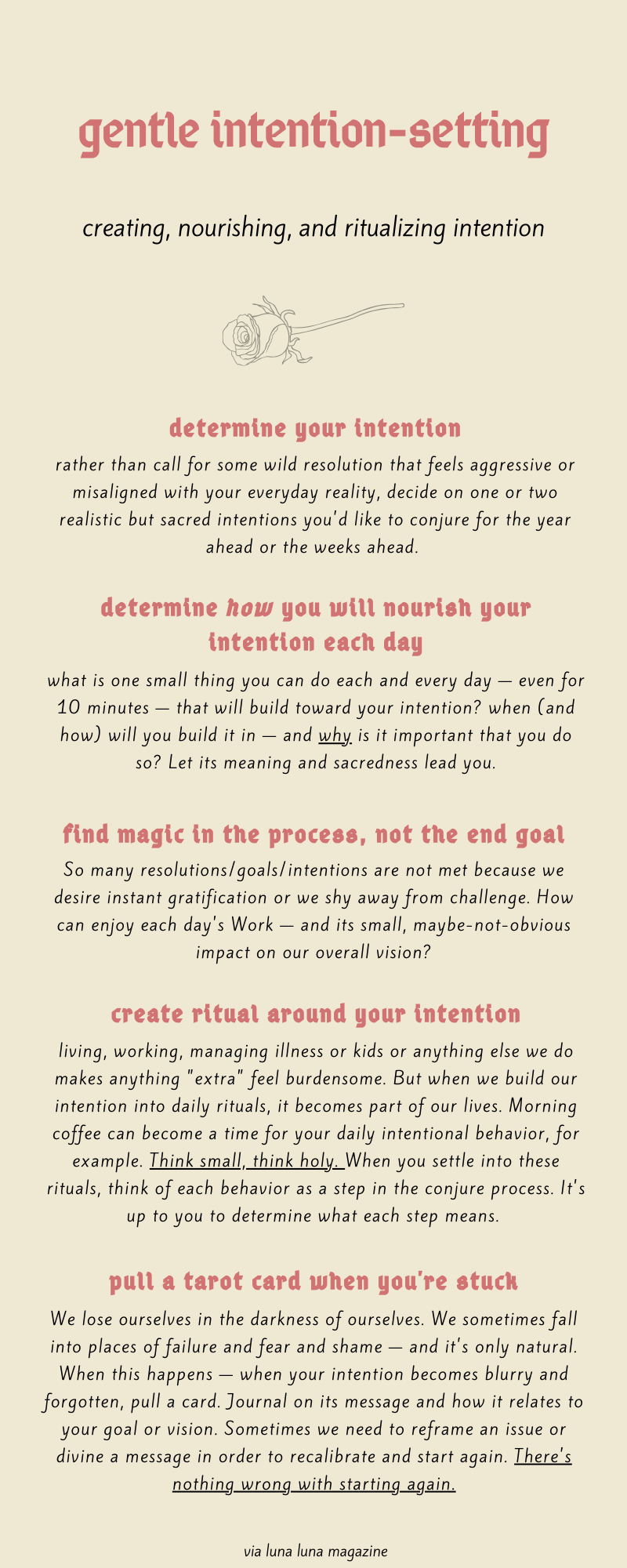
What are your intentions for the year ahead? Below, a downloadable infographic to use and keep on your end.

determine your intention

rather than call for some wild resolution that feels aggressive or misaligned with your everyday reality, decide on one or two realistic but sacred intentions you'd like to conjure for the year ahead or the weeks ahead.

determine how you will nourish your intention each day

what is one small thing you can do each and every day — even for 10 minutes — that will build toward your intention? when (and how) will you build it in — and why is it important that you do so? Let its meaning and sacredness lead you.

find magic in the process, not the end goal

So many resolutions/goals/intentions are not met because we desire instant gratification or we shy away from the challenge. How can we enjoy each day's Work — and its small, maybe-not-obvious impact on our overall vision?

create ritual around your intention

living, working, managing illness or kids or anything else we do makes anything "extra" feel burdensome. But when we build our intention into daily rituals, it becomes part of our lives. Morning coffee can become a time for your daily intentional behavior, for example. Think small, think holy. When you settle into these rituals, think of each behavior as a step in the conjure process. It's up to you to determine what each step means.

pull a tarot card when you're stuck

We lose ourselves in the darkness of ourselves. We sometimes fall into places of failure and fear and shame — and it's only natural. When this happens — when your intention becomes blurry and forgotten, pull a card. Journal on its message and how it relates to your goal or vision. Sometimes we need to reframe an issue or divine a message in order to recalibrate and start again. There's nothing wrong with starting again.

setting intentions
In Magic, Lifestyle, Wellness Tags intentions, resolutions, new year resolutions, intentional living, setting intentions, inforgraphic
Comment
Screen Shot 2020-01-03 at 3.38.05 PM.png

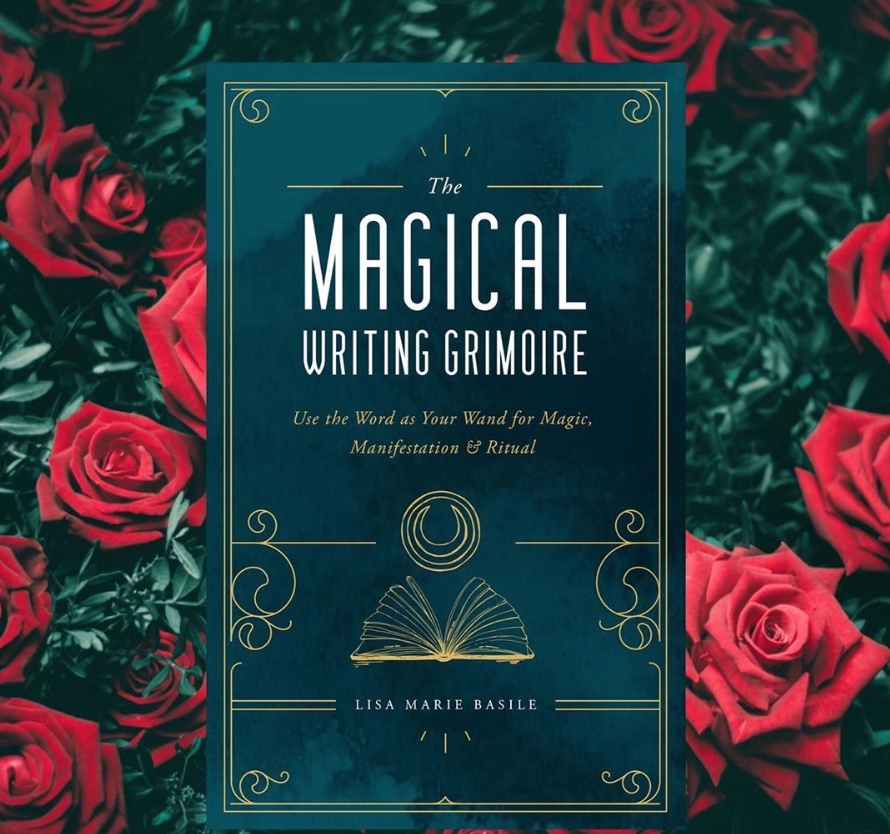
A Guide For Witches and Writers: "The Magical Writing Grimoire"

January 3, 2020

What Is The Magical Writing Grimoire? Is it for witches or writers — or both?

The Magical Writing Grimoire is a book of inclusive and accessible rituals and writing prompts for anyone who feels called to using words as a source of healing, empowerment, joy, generativity, and self-exploration. It is designed to integrate ritualistic living and to incorporate sacredness into our lives in meaningful and easy ways.

It’s for witches and non-witches (including people with secular beliefs, like myself), although of course it’s heavily based off the archetype of the witch: The witch, to me, is strong, rebellious, empowered, empathic, and bold as fuck. The witch is also conscious — of the self and others and the earth. So, it works heavily with archetypes and symbols, but it invites people who have specific beliefs to incorporate their beliefs into the work.

Really, the book is about tapping into and using your own power, your own voice, your own ideas.

It’s for writers and non-writers — anyone who is interested in the sacred, beautiful power of poetry or journaling or letter-writing, or timing writing practices to nature’s ebb and flow.

It also focuses heavily on shadow work — or unearthing the silenced, dark, shadowy parts of the self.

What will readers find within its pages?

View this post on Instagram

A post shared by ritual poetica (@ritual_poetica) on Nov 23, 2019 at 11:09am PST

Lots of rituals, lots of writing prompts, meditations, quotes from the most inspirational and wonderful people and writers, poems I wrote myself, glimpses into my personal life, and so much more. Plus, it’s really beautifully illustrated.

What is the inspiration behind The Magical Writing Grimoire?

The book was gestating in my mind for several years, but I didn’t know what its shape until the past year or so; I knew I wanted to write a writing guide — one that balanced the ritualistic with the pragmatic and every day, one that used writing as a form of magic. More than using the occult in order to generate writing, it’s about using writing to make your life more magical.

It starts with the word and ends with the word.

It’s deeply rooted in recovering from pain and trauma. When I was younger, the number one thing that got me through times of extreme trauma (family separation, foster care, CPTSD, financial instability, chronic illness) was writing. Writing gave me my voice back. It was a tool for reclamation. But more so, it was a tool for joy, creativity, and empowerment.

The ability to write is a privilege for many of us, but it’s also a free tool that can help save us. I’ve seen writing help women in domestic shelters, college students move through self-esteem issues, and incarcerated individuals tell their story. It is something sacred in itself because with our words we are taking nothing and making it into something.

So I wanted to design a gentle but effective book that people — especially any marginalized community — could use to tap into their truth and self, in a way that felt right for them. It’s guided, but it allows space for reinterpretation and individuality so that anyone can tap in.

Is it similar to Light Magic for Dark Times?

It is, and it’s not. Like Light Magic for Dark Times, it is grounded in accessibility and inclusivity. It also offers different (but looser) chapter focuses, like manifestation, mindfulness, healing, conjuring your voice, creating a grimoire, and more.

Unlike Light Magic for Dark Times, it provides a much deeper dive in terms of the rituals and the writing prompts, and it’s filled with poetry and quotes to meditate on. It’s also much more about the process of long-term self-exploration (and excavation!) than about quick, one-off rituals for different purposes. I think the two actually pair super well together!

What are your beliefs?

I’m secular (for lack of a better, more nuanced word), so I don’t work with or believe in gods, goddesses, angles or other deities. However, I work closely with the natural world (especially the power and energy of water), shadow work, energy, archetypes, and symbols. For example, I see the elements as powerful tools, offering lessons and glimpses of the purity of aliveness — and I see the astrological signs as symbols of the human condition.

When does the book come out?

It’s born on April 21, so it’s a Taurus! But let’s be honest — it was finalized and sent to the printer during Scorpio season. It’s very much a Scorpio book — it’s dark, intense, powerful, and transformative. But, like a Taurus, it wants to find beauty, comfort, and artistry. And because it comes out in the Spring, it’s a great way to kick off the new year with energy, creation, and rebirth.

People are already saying some really kind things about it, and it’s included in a few Most Anticipated lists, like in Cunning Folk and over at Patheos by Mat Auryn.

PREORDER THE MAGICAL WRITING GRIMOIRE NOW!

If you do, send preorder proof of purchase to magicalwriting@quarto.com and you’ll receive downloadable prompts and magical poetry to power up your magic.

PS: Follow the book’s journey on Instagram at @Ritual_Poetica.

In Magic, Poetry & Prose, Wellness Tags The Magical Writing Grimoire, journaling, poetry, writing, lisa marie basile
1 Comment
annie-spratt-cUlFt_jZXtE-unsplash.jpg

On Hope, Creativity, Spiritual Self-Care & Chronic Illness

December 28, 2019

BY NICOLETTE CLARA ILES

Throughout my adolescent and adult life, I have not known ‘wellness.’ In fact, mentally and physically I live with what would be described as ‘chronic illness’. Like the woodland hag who only knows the forest or the sea nymph who knows the depths of the sea only too well, I know illness. I also know joy in its fleetingness — the power of singing a favorite song from the top of your lungs — and what I often say has been a great addition to my coping toolbox: Creativity. 

Living with various diagnoses, their forms changing and taking on new names with fresh manifestations quite often, the reality of living with them is grasping for hope.  

Hope, by definition, could be seen as ‘wanting something else to happen’, but for those of us with chronic illness, we know that ‘something else’ is unlikely within our lifetimes. But there is such a thing as hope. For me, it is in creating.

Utilising my creativity has meant taking this gift, however it’s looked at, and turning it into something manageable. When there is little to ‘manage’ in a daily life of illness, something stirs within all that pain and suffering; call it magic, call it art, call it hope — or whichever name it goes by — but it is potent.

Within that potency, a vision. It can be what you hold onto during a flare up or an episode. Some call this self-care. While I view self-care as something instrumental for ourselves, there is that looming demon of capitalism, the industry of self-care or wellness — which doesn’t always find ways to include those of us whose way of being is not or can’t be, well.  

So what can we do, as chronically ill people, to shine our light? It certainly is a hurdle to have your voice heard, when at times it can be near-impossible to speak it. That is why I speak the language of images and storytelling. With creative self-care, one can imagine whole worlds they wish to reside in, even if it’s from bed.

Amongst the various ways to approach creativity as a chronically ill person, I would advise to play around with that which works for you. In order to discover this creativity within, playful exploration is a key. 

If you have a day where all you can do is very little, see what that little amount could entail — without pushing yourself beyond your limits. On days like this, I like to write not whole poems, but fragments. See how writing small passages of words looks upon paper, and how it feels to “get out” those words, no matter how short they may be. 

It could be painting with the element of water by your bedside, or expressing how you’re feeling with the fire in your belly speaking out, but whatever it is, it is worthwhile. 

In the most recent years of my illnesses, I have learnt some self-care strategies that don’t just include objects you need to buy. Sometimes, in the worst pain, we may already have some of the tools we need. 

Panic attacks taught me about the power of the breath, and how breathwork has the potential to be a free factor in self-caring for this painful body. The spirituality that arose from curiosity taught me that without factoring in the Mind, Body & Soul, these three main parts of ourselves can become out of balance. Physical pain teaches me not to push the boundaries of this body, and within that, how to be more compassionate. 

A helpful breathing technique could be one that you create, or one that exists. I like to focus on the out-breath as it flows out. Time can stretch so much when we have so much of it to our hands, and focusing on the breath that exhales out of us can calm the nerves of the next inhale. Feel free to re-create your own version of this.

Visualisation, a type of magic to me, is also a meditative exercise I find useful. Visualise yourself being surrounded — if you feel called and safe to — by a peaceful light. As this “light” holds you in safety, visualise it calming all the tension of your soul and body. While we may not be able to “rid” ourselves of pain and illness, we can, if only for a moment, imagine these tense feelings washing away in that space. 

Self-care, to me, comes from listening — to the body, the mind, and what rumbles within the soul. Ask yourself:

What do I need right now?
What have I needed?
Can I find that from where I am currently?

When you can listen to yourself, or feel listened to, it can be a soulful way of soothing all the ways we haven’t been listened to as people living with chronic illness. We owe it to ourselves to listen to our minds and bodies, in order to care for what we may need them to receive and feel.  

Some of us may have less privilege or resources than others may. However, we do have the power of gifting ourselves our deepest desires in that which lifts us up. Find a story that resonates with you, and you are already the hero of that story, because you are fighting each day. You are listening to your own body, even if it’s screaming to be heard more than you’d like. That story holdS the archetype, the joining thread that guides you into caring truly for the self. The gift of being gentle to a chronically ill mind or body is one that will serve as the power we need to go forth in these lives. 

Nicolette Clara Iles is a British-Jamaican photographic artist, witch, storyteller and lives with Schizoaffective Bipolar Disorder and Fibromyalgia. You can find their work via nicoletteclara.co.uk or @nicoletteclara on socials. 

You can also support them via: Paypal.me/farmwitch 

In Magic, Personal Essay, Wellness Tags Nicolette Clara Iles, self-care, chronic illness, disability, spirituality
1 Comment
Via Amazon

Via Amazon

Satanic Seductress: A Conversation with Kristen Sollée

December 28, 2019

BY MADISON MCKEEVER

I’ve been fangirling over author and overall goddess Kristen Sollée ever since I first read her book, Witches, Sluts, Feminists: Conjuring the Sex Positive. Aptly named after just a few of the contested identities assigned to women who misbehave, Witches, Sluts, Feminists delves into the origins and intricacies of witch feminism and its intersection with reproductive rights, sexual pleasure, queer identity, porn, sex work, and many other topics.

From a historical perspective, witches have often been associated with specific cultural functions, either enchanting as feminist symbols of empowerment, or inspiring terror in a paranoid misogynistic Miller-esque fever dream. In recent years, witchcraft, magic, and other alternative spiritual practices have been the focus of increased attention and subsequent scrutiny, as people experiment and engage with feminism in all of its iterations.

Throughout her work, Kristen has spoken with countless activists, scholars, artists, and practitioners of witchcraft in order to enrich the public’s understanding of witch feminism and illustrate that witches in all forms, from Tituba to Stevie Nicks to Sabrina to The Hoodwitch, are powerful and relevant well beyond the month of October.

In addition to being a champion of female sexuality, Kristen is the founding editrix of the sex positive collective, Slutist (RIP), and is a gender studies lecturer at The New School. Her second book, Cat Call: Reclaiming the Feral Feminine: An Untamed History of the Cat Archetype in Myth and Magic was just released in September. Kristen herself is too fucking cool, whether she’s speaking out against SESTA/ FOSTA or rocking a killer purple lip on Instagram. She’s brilliant and generous enough with her time that earlier this year I had the pleasure of speaking with her about Witches, Sluts, Feminists, capitalism, and fighting for sexual liberation.

MM: How did you first become interested in the topic of witch feminism?

KS: It’s a long, circuitous story filled with both intention and magical intervention, but I’ve been interested in the occult since childhood, was raised by a feminist intuitive, and found my way to this subject first personally, and then professionally.

MM: What was the process of researching and writing this book like?

KS: Not pretty. Writing a book like this required confronting a lot of my own personal demons as I was interviewing dozens of people, scouring libraries and bookstores and websites for source material, and meditating on how I could do justice to a history so rife with pain and persecution that has been obscured and manipulated in numerous ways. It wasn’t something that was always fun or easy, but it was overall a joyful project to get to amplify voices that matter so much to me.

MM: In Witches, Sluts, Feminists, you polled 50 people about the definition of “witch,” and came back with a wide variety of answers. What’s your personal definition?

KS: The witch evades a single definition—that’s the beauty of the concept, really—but I will try! A lightning rod. A change-maker. A caretaker. Priestess of the persecuted. Harridan and hierophant. Rooted in the earthly and the astral. Fact and fiction, feminine and masculine, and so many things. The witch will forever be a shapeshifter.

MM: Do you think there is a generational/ geographical/ socio-economic connection to how the idea of the witch is viewed?

KS: Definitely. There are those who understand the witch to be an archetype of empowerment, those who see her as a Satanic seductress or a relic of religious persecution, and those who think she’s merely a cartoon hag to chuckle at on Halloween. It all depends on your own background and belief system and knowledge of the history.

MM: If you had to pick a witch or goddess that you’re most inspired by, who would it be?

KS: Oh there are so many, but I will pick a fictional one: Elvira. A witch who wields her sexuality in potent and playful ways. So many witches in fiction are so serious, she’s really a breath of fresh air. And a forever style icon as well!

MM: What are your “required reading” books for anyone looking to learn more about witch feminism?

KS: Silvia Federici’s Caliban and the Witch; Starhawk’s The Spiral Dance ; Maryse Conde’s I Tituba: Black Witch of Salem.

MM: Aside from reading, what are some resources for witches-in-training who are looking to educate themselves about practices, lineage, and history?

KS: Your local occult shop, or, if you don’t have one, The Hoodwitch’s online community. There are infinite folks to follow online, too, but some of my faves for inspiration and education in addition to @thehoodwitch are @themexicanwitch; @iamsarahpotter; @jaliessasipress.

MM: Do you see witch feminism as a lifestyle, a religion, or a hobby that can be shelved and called upon at times when it’s needed? I’m thinking primarily of practicing witchcraft in the age of Trump, and how many feminists are calling upon chanting, intention candles, hexes, and crystalogy as self-care rituals to heal from oppressive and toxic masculine government forces. Does witchcraft look different depending on what it’s needed for?

KS: Absolutely. Everyone’s spiritual and political practice looks different. There is no one way to use these powerful tools. Some folks don’t believe in mixing their witchcraft and their politics. Others believe witchcraft is specifically for healing and fighting oppression in the personal and political realms and that you cannot separate the two.

MM: Why do you think witches are so trendy right now? Is it because so many people need an ideology that centers around empowered women? Is it a form of escapism? Or are people just looking for a source of spiritual healing in a world that increasingly feels more and more hopeless?

KS: All of the above.

MM: How do you feel about the intersection in recent years between witchcraft and capitalism? In Witches, Sluts, Feminists you highlight multiple voices in the witch community and the disparate opinions on the topic, but you also point out that, “the witch is ‘the embodiment of a world of female subjects that capitalism had to destroy’ in order for the reigning economic order to triumph” (132). What are the implications of capitalism co-opting witchcraft without educating consumers about the origins of their purchase? (ahem, Sephora)

KS: I am quoting Silvia Federici there, but yes, it is very necessary to address capitalism’s co-optation of witchcraft and the occult, particularly when workers (often women in sweatshops around the world) are actively harmed in the making of “witchy” products and when closed, indigenous practices are being stolen from in the process. That’s not witchcraft, it’s exploitation.

MM: What are your feelings on Trump’s ironic and often repeated use of the term “witch-hunt” in reference to himself and the media? I think the linguistic significance of this is fascinating based on what it entails, historically- speaking.

KS: Like much of what Trump says, it’s a horrendous distortion of historical fact. It also goes to show how much misinformation there is about what “witch hunts” actually were—and are today.

MM: One of the popular phrases that has gotten circulated across social media and throughout women’s marches in the last year reads (in some iteration), “Nasty Women are the granddaughters of the witches you couldn’t burn.” Considering this and the prevalence of witch and goddess energy within the #metoo movement, do you think the spiritual and the political can intersect for the greater good?

KS: Absolutely, as long as the spiritual doesn’t become dogmatic. There still has to be room for spiritual and religious dissent and plurality or we’re no different than the religious right.

MM: I’m fascinated by the sexual connotations of American witch history, how witches were seen as harnessing an impure (ie. un-Christian) sexual appetite, and how the deeply patriarchal nature of early New England allowed this ideology to perpetuate until people were put to death. Can you speak more about how and why you think a deep-seated fear of female sexuality exists?

KS: Patriarchal religion—in America’s case Christianity—is at fault for this one. When you have an origin story that places female desire as the root of pain and suffering (hello, Eve) you’re not off to a very good start, you know?

MM: Why do you think the world seems to be threatened by sexually enlightened womxn, or womxn who unabashedly identify as sluts? Are sluts viewed as a threat to masculinity because subverting the terminology pushes back against the misogyny of our government and world?

KS: Being unapologetic about your sexuality or your body as a woman or a person on the feminine spectrum remains so radical because it counters everything that patriarchal society dictates about the masculine dominating the feminine.

MM: Are “witch,” “slut,” and “feminist” synonymous terms?

KS: No, I don’t think so, although there is great overlap between them depending on culture and context. To me, they are beautifully complex, complimentary terms.

MM: Do you think the meteoric rise of witches will continue indefinitely?

KS: Witches may not be splashed across The New York Times forever, but they certainly aren’t going anywhere anytime soon. And thank goddess for that.

Madison McKeever is a writer based in New York City. She probably wants to ask what your favorite book is. She's passionate about true crime, Timothee Chalamet's sartorial decisions, Instagram cats, and talking about the orgasm gap. Find her @thesleepygirlscout
In Poetry & Prose, Pop Culture, Magic Tags Kristen Sollée, madison mckeever
1 Comment

Weekly Mantras for Badass Witches

November 5, 2019

Stephanie Valente lives in Brooklyn, New York, and works as an editor. One day, she would like to be a silent film star. She is the author of Hotel Ghost (Bottlecap Press, 2015) and Waiting for the End of the World (Bottlecap Press, 2017). Her work has appeared in dotdotdash, Nano Fiction, LIES/ISLE, and Uphook Press. She can be found at her website.


Read More
In Magic, Lifestyle Tags astrology, zodiac
Comment

Weekly Mantras for Badass Witches: Halloween Edition

October 31, 2019

Stephanie Valente lives in Brooklyn, New York, and works as an editor. One day, she would like to be a silent film star. She is the author of Hotel Ghost (Bottlecap Press, 2015) and Waiting for the End of the World (Bottlecap Press, 2017). Her work has appeared in dotdotdash, Nano Fiction, LIES/ISLE, and Uphook Press. She can be found at her website.

Read More
In Lifestyle, Magic Tags astrology
Comment
lisa marie basile italy

Magical Water, Ancestry, & Shadow Work In Italy

August 26, 2019

BY LISA MARIE BASILE

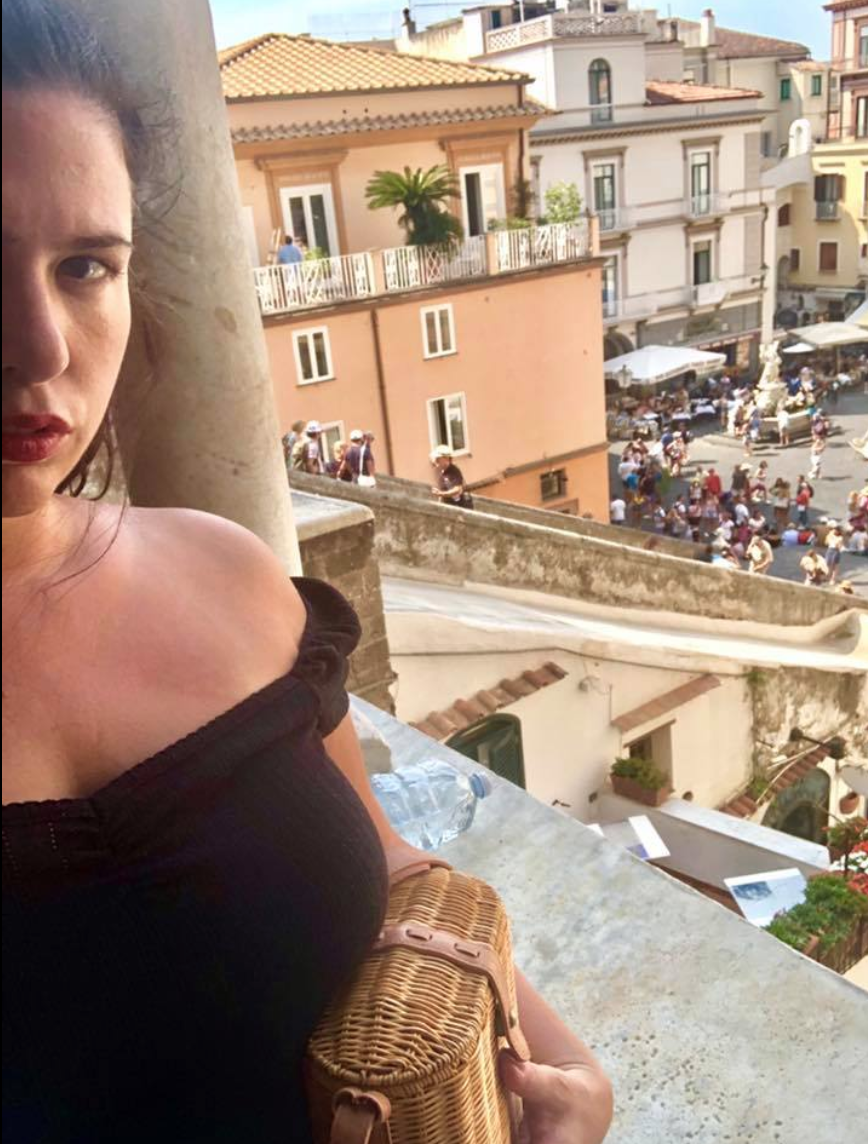
I came to Sorrento in Campania, Italy for eight days, alone. Actually, I’m writing this from the balcony off of my room during the golden hour, when the pink and white flowers and the ivy vines are drenched in a soft honey-colored light. God’s filter. The cosmos’ generous reminder that Earth is perfect without us. But the Italian people surely make a strong argument; they are one of the world’s maestros of splendor and creation. From their frescoes to the delicate placement of flowers wherever and anywhere flowers can grow, the Italians understand the holiness of not only aesthetics but intentional living. 
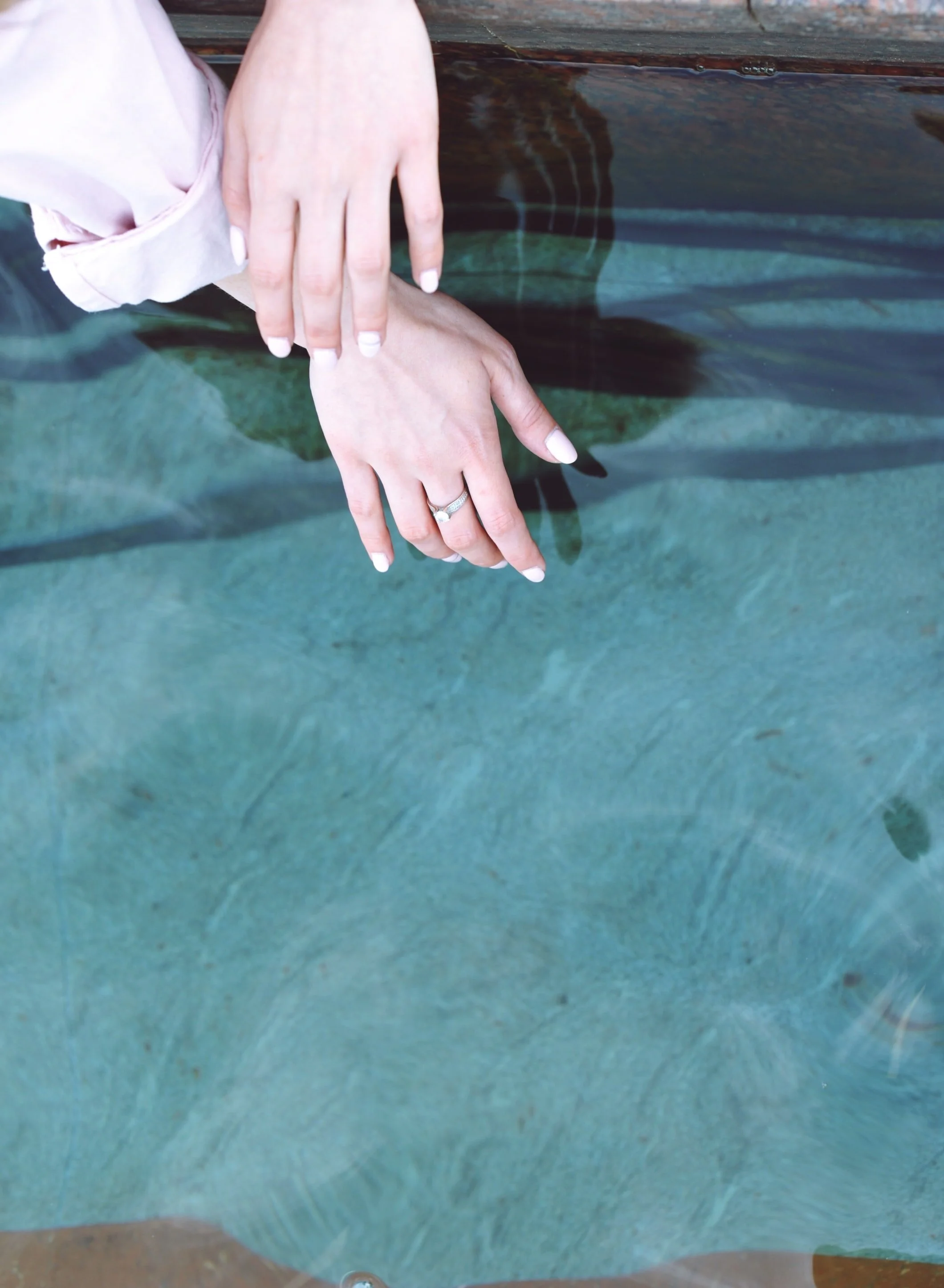
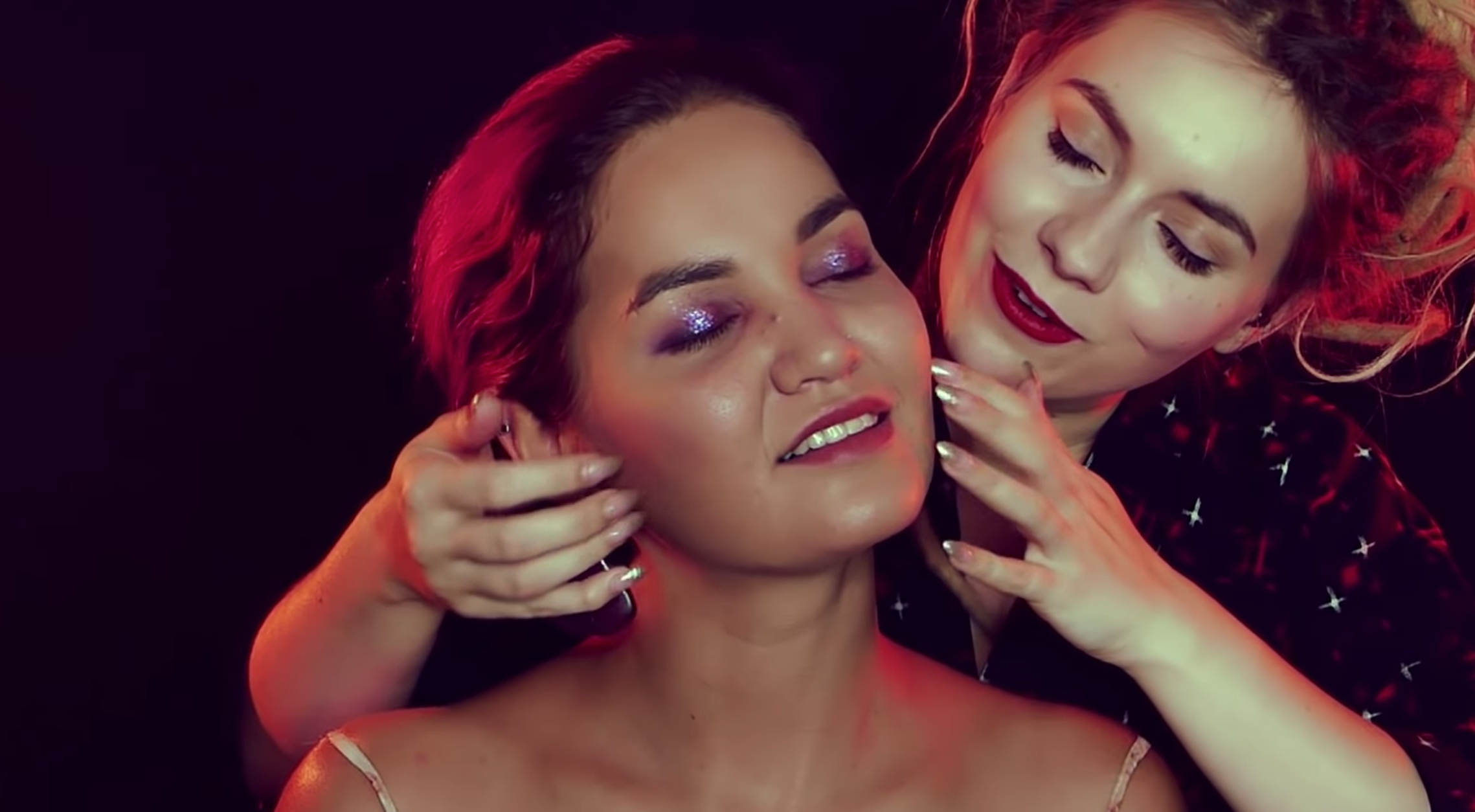
So, in the land of the sirens, as the Sorrento coast is known, it is no surprise that I — without a true understanding of what I would embark on — fell well into the depths. Perhaps you can blame it on my elemental nature; I’m a scorpio whose language is cthonic. I crave the long hours of confession and exploration and transformation. 

Before Italy, I’d been in London alone — in quaint Datchet, a village just outside London, technically —  for three days. So for 11 days, I’d been in relative solitude, save for ordering a pint or cobbling enough Italian together to purchase a boat ticket. 

View this post on Instagram

A post shared by lisa marie basile (@lisamariebasile) on Aug 26, 2019 at 1:31am PDT

As a gift to myself for finishing my forthcoming book, The Magical Writing Grimoire (2020), I booked a holiday to Italy, on my own — to write, to dream, to swim in the cerulean sea, to see where my blood comes from.

But as I would learn — when night fell here in Italy, it fell hard, and without a soul to speak to on my own (in this six-room church-turned-bed and breakfast tucked high into the mountains) I felt a transformation take place.

Into the depths 

For some, eleven days of solitude is doable, desirable even. But for many, it’s not. It is a sentencing. It isn’t that I crave silence. On the contrary; I fear it — especially coming from New York City. It’s that I needed it. There’s a difference. 

If I could not quiet my mind, if I could not disappear from my life, how could I truly know what it meant? What could I learn from the other side of my life, where my own body is my only anchor?

As creators — writers, leaders, artists — and as humans, we rely on a kind of sustenance. You pick the poison. We need to drink it, inhale it, dive into it. For me, that bread and wine is light and space, solitude, apart-ness. A certain relinquishing of comfort. I needed to be challenged, far away from the myself and the places I knew. I felt a restlessness growing in me that demanded a sequestering. 

For the longest time, however, my weaknesses have found the form of a fear of abandonment, the need for (but fear of) quiet, and lack of control. It comes from trauma and it comes from knowing that around any corner I might fall into the abyss of self. Thinking too much. Add a little wine, and I’m fucking gone.

But in being alone, I have faced my demons. I have named them. Here in Italy I’ve abandoned what I knew to be comfortable and safe. I felt, in some moments, far into the mountains in this isolated commune high above the more populated Sorrento coastline, that I abandoned myself. What were you thinking, I asked myself at least once, coming here alone, for all this time, without anywhere to go on your own? There are two restaurants down the road, a market that closes for siesta, and winding streets of farmland that cannot be traversed by foot.

I’d abandoned a sense of control. First of all — traveling abroad is not like going to the cinema alone or sitting awkwardly, fidgeting during a solo dinner. The end point is not soon. The awkwardness is replaced by a small village curiosity, a light that shines on you and is hot and is real. You begin to see yourself as the subject. But you realize the ego is a type of demon you must drag out to the little square and send off on its way.

But more than noticing my aloneness, control issues threw me into the sea. I could not control the inevitable surprises, which came in the form of car breakdowns, missing boat rides, nearly fainting in 90-degree heat. Walking up hundreds of steps, on a cliff, just to get to some semblance of where other people are. 

And of course, the quiet. The heavy quiet that pools in like a ghost, under the door and through the shutters, at night. The quiet that tells you how far you are from everything, how many hours you have until sleep finally settles in. What of the anxieties and rogue feelings of sadness? They are there, a chaotic circus of them all, prodding you, reminding you how far up the mountain you are — without a car nor a means of leaving. When you look out the window, you see Vesuvius. 

You think of your body as ash. 

But isn’t this what you came for you, I asked myself. Isn’t this what we all want? In life, we are forced to move through our traumas — things that have happened to us, things that have been done to us. We carry our wounds as an albatross, even if we aren’t aware of it. And life has dealt us all a heavy hand. 

In my day, I’ve seen, either in myself or in my family, foster care addiction. I’ve seen chronic illness and death. I’ve seen poverty and I’ve seen prison. What are your wounds?

Why would I willingly stoke the flame after survival? Why I let myself be lured by sirens?

In some sense, choosing to be uncomfortable and choosing to work through the quiet is the lesson. It is a pain that I didn’t quite expect in coming alone to a faraway country without a friend or anyone to speak to. But it wasn’t the pain of place. It was the pain I brought with me.

I was the hurt. I brought my fear. I brought my anxiety. Italy didn’t do this to me. There’s a certain shock in realizing that. And a definite freedom.

li galli islands

Solitude & loneliness are not the same

I felt so alone on so many nights, an aloneness that was less about not being near people or places and more about my individual decision to fly 4,000 miles from home. How the gift of autonomy comes with a solitude that must be understood and appreciated, rather than feared.

How we are, ultimately, alone.

But being alone is not the same as loneliness. The people in the market, the people in the farms plucking lemons, the people who make me limoncello, the people who steer our boats from island to island, the people who direct me to the nearest whatever it is, the tourists who see me sitting alone and ask me to dine with them — there are people everywhere, and that is a treasure. Those small slivers of conversations are a reminder that we are alone, but we don’t have to be lonely.

The earth sees you. It wants you to be here.

One night, I texted my father for help. The loneliness followed me up the little hill when I walked back from dinner. My father, Italian as they come, served many years in prison — and weeks in solitary. I felt silly asking him for him, but I knew he’d understand what solitude could do, and he said:

Always realize today is just one day. And tomorrow is a new beginning. A new opportunity to feel differently or experience different things. Don’t let your mind control your feelings. Think how lucky you are —being able to travel. And having people in your life that love you and care about you. You are never detached or isolated. The world is much too small for that anymore. Everyone is connected. I love you.

In silence, we grow. It reminds us that not only can we and do we survive, we are self-resilient when we willingly put ourselves in uncomfortable situations, when we decide to settle in and let the silence fill us with every thought and memory imaginable.

There is no way down the mountain. There is nothing but your own mind — and no matter how luxurious or beautiful the country or place you are in, we are all alone, bodies full of chemicals and traumas that demand we look them in the eye. 

Ancestral work is healing

My father’s family is Italian and Sicilian — at least his parents and great grandparents were. We have Spanish and West Asian ancestors as well.

I was raised in New Jersey with my Italian/Sicilian grandparents. My nonna, from Palermo. My grandfather, part Napolitano. I only saw Naples from the car, its hundreds of homes — colorful, scattered, boxy, so much laundry hanging you could see it from space. Many of its people are living in poverty, under the stronghold of a mafia, the Camorra. They say Naples is the realest city in Italian, a place that doesn’t afford any of the luxuries or predictable splendor of other cities. It’s hard and gritty and I have that in my blood.

My grandfather, Sabatino, whose family hails from this city — what must his family have done to get to America? What drove them out? What sort of assimilation problems did they have when Italians were considered dirt?

italy amalfi

My grandmother Concetta Maria came by boat — you can see her name on a ship’s manifest, along with her sisters, one of which fell so ill she had to be taken to the hospital upon arrival in the port of the United States. She told me once about the blackshirts, Benito Mussolini's men, wandering around as she sat under lemon trees.

She spoke Sicilian, my grandfather spoke an Italian dialect. They made fun of one another’s language. When they came here, they didn’t teach any of their seven children Italian or Sicilian. They forced assimilation in the household, as many immigrants do.

In any sort of ancestral work, you aim to understand your bloodline. In my case, my grandparents were relentlessly catholic, deeply disappointed in many of their non-catholic grandchildren — me — and generally chose favorites. Some were favored, coddled, loved. Near the end of my grandmother’s life, well into her 90s, she made me cake, presented me with a rosary, made a sort of apology. 

I’ll never forget it. She pulled a long lock of black hair from a box and wielded it over the dinner table. She kept her hair, as if to keep her youth, her vitality.

To this day, my black hair reminds me of her. I care for my hair — wavy and coarse and wild — because it is Italian hair. It is my own. 

And on this trip, when I boated from Sorrento to Capri, I thought of them, of their struggles, of how hard they worked to make a life for themselves. Where they failed and how they loved. How they made my father, the artist and musician and poet, and how he made me.

I dove from the small passenger boat into the deep emerald-green water. I was submerged quickly, lungs full of salt water so thick and fast that I gagged. I swam back to the boat’s ladder, frightened, and out of control. But I caught my bearings and swam again. The sea wanted me to know her.

This was baptismal. Swimming in the waters of my blood, my body fully cradled by the earth’s watery womb. Towering island rocks loomed over my head. I was being tugged on by the ancient ghosts of time, my ancestors saying hello, my ancestral land showing me its gusto and bravado. And its softness. In the water a sense of home came over me, no matter how scared or foreign I felt.

I was there because two people, at some point, made love. And they lived here, and they fished in these very waters, and then their children had children. And someone, some girl, me, came back — in search for something.

There is a photograph of my grandfather standing at the water’s edge, birds flocking all around, his black jacket strewn over his shoulder all casual, as he looks back at the camera from afar. It is so blurry you couldn’t make it out entirely, but it is on the prayer card from his funeral, so we know it’s him. You could make him out anyway — his deep golden skin, his firm stance. 

He was a fisherman, and my father is a fisherman. They spoke the language of water. They understood and understand water in their very nature.

 And now I speak it too. Born of a water sign, obsessed by the depths, I am called to the sea by sirens.

positano

Parthenope, the siren of Naples

At my bed & breakfast, my door is labeled in gold: Parthenope. I only remotely knew of this siren, that she was one of the many who lived on the coast of Sorrento. But I was not expected to know her so well.

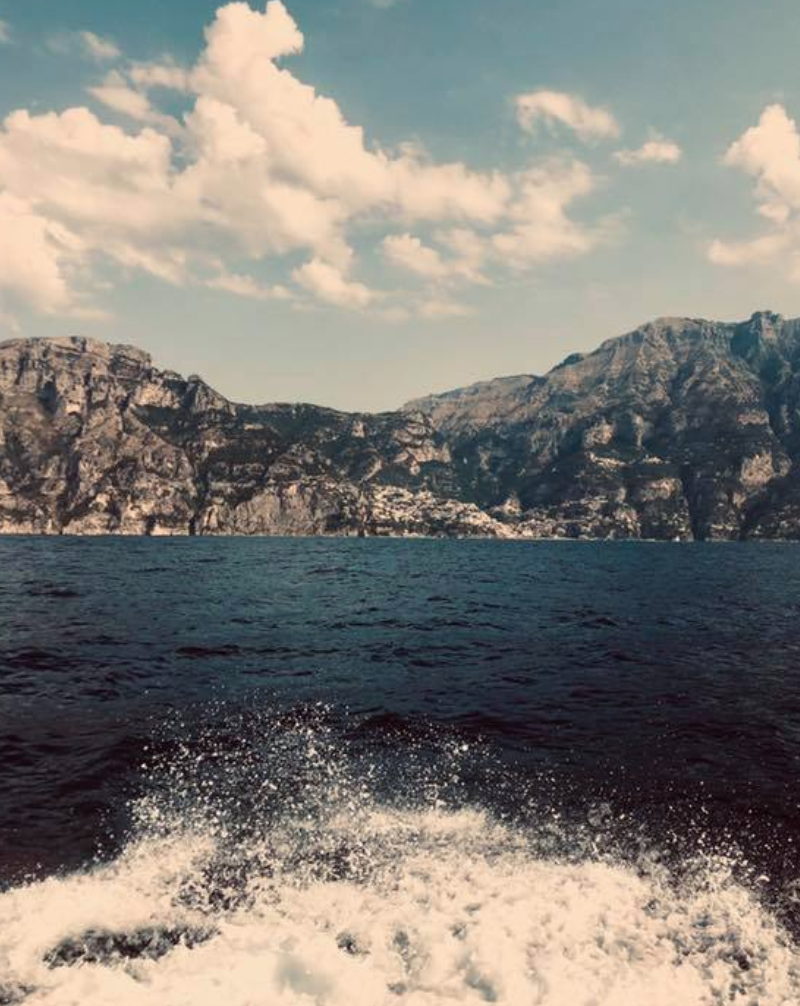
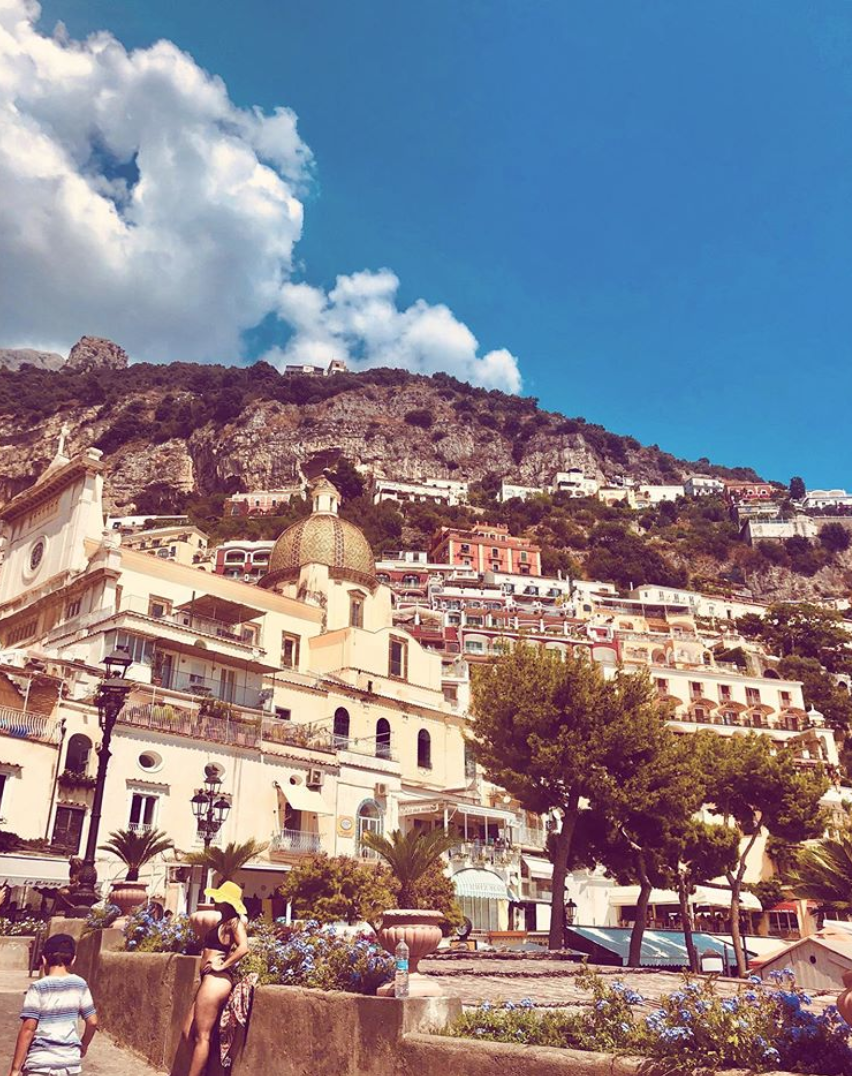
On the way to Amalfi and Positano one day, we pass Li Galli, an archipelago of little islands — Gallo Lungo, La Castelluccia, and La Rotonda— surrounded by cerulean water. These islands are also known as Le Sirenuse, where Ulysses’s sailors were sought out by the sirens, thought to be named Parthenope, Leucosia, and Ligeia. Of course, sailors would crash in wild waters against these jutting rocks, only to blame the voice of women for their misfortune.

The sirens, aside from singing, played the flute and the lyre, instruments which glide on the wind with a sort of frenzied beauty. The siren stories goes back to the 1st century, when Greeks told their tales. I imagine them as mermaids, although they are also commonly depicted as having a bird body with human heads.
.
My room, the is Parthenope room, is decorated in light blue, gold, and ivory. Of course, this was initiatory, a blood welcoming. Upon first entering, I fell into a deep rejuvenating sleep, lulled by some song, some sustenance from ancient times.

My dreams were of water and lineage.

When I awoke, I felt I’d become a siren, a descendent of Parthenope, perhaps, someone who understood the sea. And, while we’re at it, can bring sailors to their deaths.

The legends — and there are many — say that Parthenope was said to throw herself into the sea when she couldn’t please Odysseus with her siren song. Her body was found on the shore of Naples, where my grandfather comes from. Other stories say that a centaur fell in love with Parthenope, but Jupiter couldn’t have this — and so he turned her into the city of Naples, while the centaur became Vesuvius. And when Vesuvius couldn’t have her love, he would erupt.

Parthenope taught me something — that even in beauty there is darkness. It is up to you find the light. You can find it on islands, and you can find it in yourself.

But there is so much I don’t know. There is so much I’ll never know. For many, the mystery of lineage is a wound. A forced removal of information. A wound of colonialism and genocide. A nothingness. An end of the line. 

For me, it’s the fact that my ancestors were disappointed that I wasn’t more Catholic, that my parents hadn’t stayed together. That they didn’t pass on their language.

My ancestral work, I’ve realized, is accepting that I can still come from a place, still be of a thing, still call upon the past, still devote my life to exploring my blood — even if my family wasn’t perfect, even if I wasn’t catholic enough in the eyes of my grandparents. Because ancestral work is so much bigger than everything we understand.

My ancestors tell me to find gratitude in being alive, to look out and see the sky and sea, to find magic in the city and the thousands of doorways and street signs — and to keep looking for Synchronicity. To always keep your eyes and ears open. Messages find their way.

How many of the ones of who made me plucked lemons? How many of them swam in the shore? How many of them drove through the city streets of Naples, or down the mountains in Sorrento? How many of them stopped and prayed at the very churches I photographed? How many of them built cities with their own hands and brought culture to America when they came? How many of them stayed in Italia?

The sheer fact that life moves onward, rolling as water, a siren song that continues — and how lucky it is that I get to breath in this existence? That is my ancestral work. 

What have you learned on your travels? It doesn’t need to be far to be meaningful.

positano

A place always reveals itself long after you leave


Tonight, my last night, the air feels quieter. The dark feels more expansive. The room feels emptier. As if the fullness of my adventure has come to a close, and I am just waiting departure. As if my body has left already, but some essence of me stays. Sometimes this cutting off hurts. You can’t place why, but it does. The places we go, especially those we were meant to see, feel the vibration of our leaving as much as we feel them fade into the distance. That’s the cord.

Of course, once I leave, this place will become more real to me — more beautiful, somehow — than it was when I was there. The greens will be the most green. The curtains will always be swaying in my mind.

What I will remember isn’t the long nights or anxieties, the running from terminal to terminal or the breakdowns in language. I’ll remember the way the sun melted into the ocean. I’ll remember how the Italians are late even to toll their own bells. I’ll remember the way the skipper looked when I thanked him. His golden body sweating from long days carrying bodies to and from the coast lines. I’ll remember the long siestas and the open windows and the dogs in the street.

I’ll remember how quickly my room filled with light when I opened the shutter even a little. How much the light wants to get in. How we must let it. How we owe it to our lives, our fears, our wounds, and our ancestors.


Lisa Marie Basile is the founding editor of Luna Luna Magazine, an editor at Ingram’s Little Infinite, and co-host for the podcast, AstroLushes, which intersects astrology, literature, wellness, and culture. She regularly creates dialogue and writes about intentionality and ritual, creativity, poetry, foster care, addiction, family trauma, and chronic illness—particularly Ankylosing Spondylitis, a disease with which she lives. Most recently, she is the author of LIGHT MAGIC FOR DARK TIMES (Quarto Publishing/Fair Winds Press), a collection of practices and rituals for intentional and magical living, as well as a poetry collection, NYMPHOLEPSY (co-authored by Alyssa Morhardt-Goldstein). Her second book of nonfiction, The Magical Writing Grimoir, will be published by Quarto/Fair Winds Press in April 2020. It explores the use of writing as ritual and catharsis. Her essays and other work can be found in The New York Times, Chakrubs, Catapult, Narratively, Sabat Magazine, Refinery 29, Healthline, Entropy, Narratively, Catapult, Best American Experimental Writing. She studied English and psychology as an undergraduate at Pace University, and received a Masters in writing from NYC’s The New School. FOLLOW HER ON INSTAGRAM HERE.

In Place, Wellness, Magic Tags ancestral work, italy, sorrento, campania, travel, world travel, tourism, li galli, sirens, siren songs, solitude, Traveling, italia, naples, mafia, ancestors, magic
Comment

Weekly Mantras for Badass Witches

August 13, 2019

Stephanie Valente lives in Brooklyn, New York, and works as an editor. One day, she would like to be a silent film star. She is the author of Hotel Ghost (Bottlecap Press, 2015) and Waiting for the End of the World (Bottlecap Press, 2017).  Her work has appeared in  dotdotdash, Nano Fiction, LIES/ISLE, and Uphook Press. She can be found at her website.


Read More
In Lifestyle, Magic Tags astrology, Zodiac
Comment
← Newer Posts Older Posts →
Featured
‘in the glitter-open black' — poetry by Fox Henry Frazier
'poet as tarantula,  poem as waste' — poetry by  Ewen Glass
'poet as tarantula, poem as waste' — poetry by Ewen Glass
'Hours rot away in regalia' — poetry by Stephanie Chang
'down down down the hall of mirrors' — poetry by Ronnie K. Stephens
'Grew appendages, clawed towards light' — poetry by Lucie Brooks
'do not be afraid' — poetry by Maia Decker
'The darkened bedroom' — poetry by Jessica Purdy
'I am the body that I am under' — poetry by Jennifer MacBain-Stephens
instagram

COPYRIGHT LUNA LUNA MAGAZINE 2025